The Hidden Cost of Cheap Solutions: How to Choose a Pop-Up Gazebo Built to Last
Planning an outdoor market, a corporate event, or a family gathering? While aggressive supermarket discounts might be tempting, skimping on pop-up gazebo materials almost always backfires. The first gust of wind or a heavy Irish downpour can quickly turn a "bargain" into an expensive mistake. If you are looking for a reliable pop-up gazebo, the key isn't the lowest price, but structural durability that eliminates the hidden costs of repairs and the need to replace shelters every season.
The vast difference between a cheap seasonal shelter and a professional solution is fully revealed when frequent set-up is required on challenging terrain. Investing in quality is not just about aesthetics; it is primarily about the safety of people and the protection of your property. Discover which technical parameters determine whether your gazebo will last for one event or a decade of intensive use.
Why are Construction and Materials Crucial for Pop-Up Gazebos?
The absolute foundation of stability is the frame. While suspiciously cheap alternatives use thin aluminium profiles and brittle plastic joints, durable gazebos are dominated by steel or thick-walled aluminium with meticulous attention to detail. It is the quality of the joints and the weight (GSM) of the canopy that decide whether your gazebo will survive the unpredictable weather and maintain the professional look that your guests will immediately appreciate.
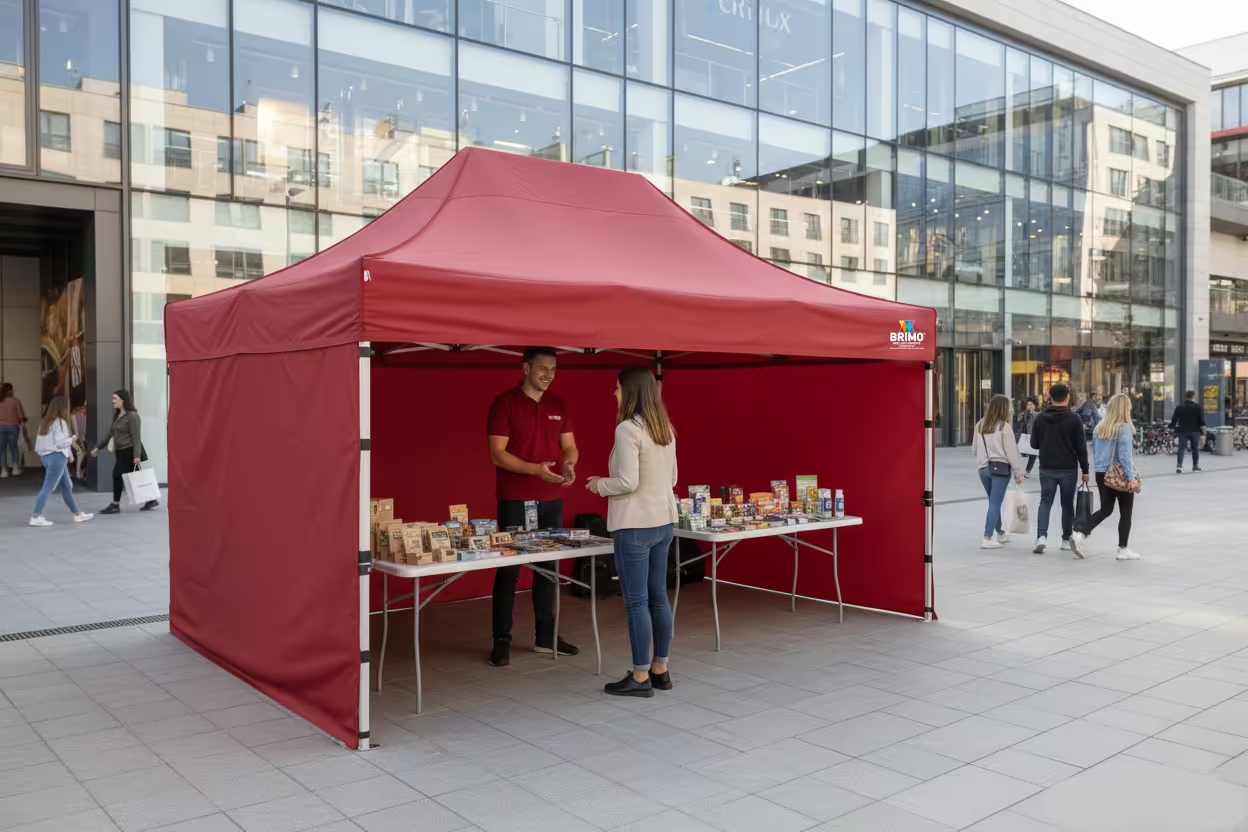
How to Distinguish a Quality Pop-Up Gazebo from a Cheap Imitation
When comparing visually on an e-shop or in a flyer, all pop-up gazebos may look almost identical. Photos can be deceiving, and retouching often hides thin profiles or poor-quality stitching. However, the difference becomes clear out in the field. When choosing the ideal gazebo, you must go beneath the surface and focus on specific technical specifications. Frame strength, joint type, and canopy weight are the three pillars that determine whether your gazebo survives a summer storm or ends up in a skip after the first weekend.
A common mistake is purchasing a shelter with riveted plastic joints. If such a part breaks on a cheap gazebo, repair is practically impossible, and you must buy a whole new frame. Professional solutions from trusted manufacturers use bolted joints made of durable materials. This means that if any part of the pop-up gazebo is damaged during extreme handling, you only need to replace that one specific component.
Key Details: What to Look Out for Before Buying?
In addition to the frame itself, the roof is extremely important. A quality canopy doesn't just provide shade; it must be 100% waterproof and UV-resistant so that the colours don't fade after one season. While supermarkets offer canopies made of thin polyethylene (reminiscent of a thick shopping bag), professional gazebos feature heavy-duty Oxford fabric with an internal PVC or PU coating, which guarantees you stay dry even during a prolonged Irish downpour.
Comparison: Cheap vs. Professional Pop-Up Gazebo
To make it easier for you to navigate the offers, we have prepared a clear table. This summary shows why it doesn't pay to compromise on material quality when investing in pop-up gazebos.
| Parameter | Cheap Supermarket Gazebo | High-Quality Gazebo |
|---|---|---|
| Construction Material | Thin aluminium or sheet metal (often under 0.8 mm) | Durable steel or thick-walled aluminium (over 1.2 mm) |
| Joint Type | Brittle, riveted plastic (non-replaceable) | Bolted steel or nylon joints (replaceable) |
| Canopy Fabric | Thin PE / polyester (soaks through, tears easily) | Heavy-duty Oxford fabric with PVC/PU layer (100% waterproof) |
| Wind Stability | Very low (risk of snapping in moderate wind) | High (with proper anchoring, withstands strong gusts) |
| Overall Lifespan | Usually 1 to 2 uses (short-term solution) | Years of intensive and regular use |
As you can see in the table, the initial "savings" when buying the cheapest pop-up gazebo quickly disappear when you have to throw it away after the first use and buy a new one. In the long run, the only rational and economic solution is to choose certified quality.
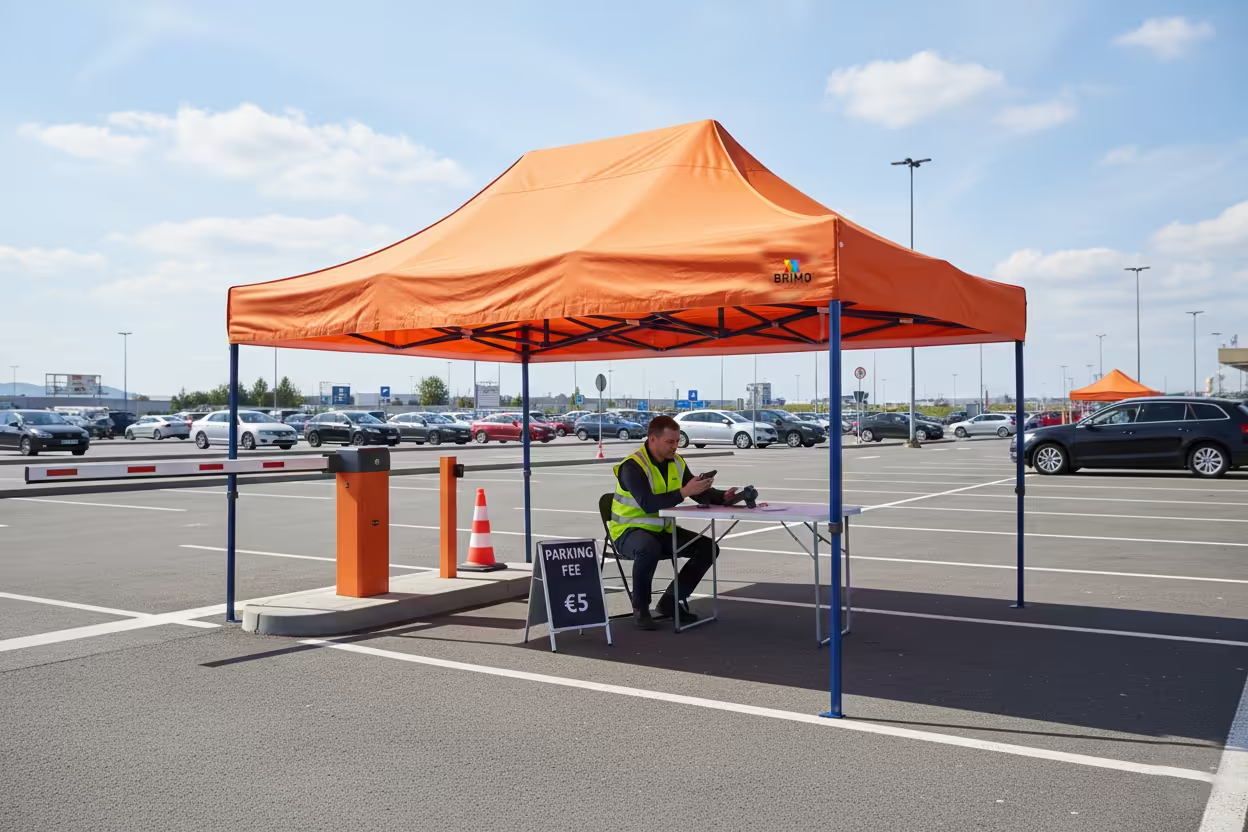
A Rational Investment in Mobility and Safety
In the final purchasing decision, it's not just immediate savings that should play a role, but primarily the technical value and expected lifespan of the product. A quality pop-up gazebo is not a single-use consumer good, but an important functional element that protects your property, the health of people, and the integrity of your brand presentation. Choosing a more robust construction and certified materials results in lower maintenance costs and the elimination of risks associated with sudden weather changes. Investing in a professional gazebo from a renowned supplier is thus a strategic step to ensuring the smooth running of every outdoor activity.
Expert Answers to Key Questions
1. What are the limits of using a pop-up gazebo in winter conditions?
Using gazebos during the winter is technically possible, but it requires increased attention in terms of static load. Professional steel or aluminium frames are designed to withstand wind, but their roof section is not intended to bear the weight of wet snow for long periods. In temperatures below freezing, the elasticity of the canopy's PVC layers may decrease; therefore, it is recommended to handle the gazebo with care to prevent mechanical damage to the fabric. For safe operation, it is essential to regularly remove snow from the roof and ensure superior anchoring in frozen ground or by using weight bags.
2. What determines the actual speed of assembly and mechanism stability?
The speed of setting up a pop-up gazebo is directly influenced by the quality of the hinged joints and the precision of the profiles' manufacturing tolerances. Quality models use sophisticated locking systems and nylon sliding sleeves, which minimise friction when opening the frame. Mechanism stability is defined by the geometric accuracy of the scissor-cross frame – the firmer the joint and the thicker the material, the less unwanted twisting occurs during handling. With cheaper alternatives, rapid wear occurs at the friction points, leading to the gazebo jamming and a gradual reduction in its functional safety.
3. What is the significance of modularity and spare parts availability?
One of the most important aspects of pop-up gazebo sustainability is their serviceability. Professional systems, such as those offered by our company, are designed as modular units. In practice, this means that every profile, joint, or bolt is an independently replaceable component. In the event of extreme mechanical damage, for example, during an unpredictable storm, it is not necessary to dispose of the entire pop-up gazebo. By replacing a specific part, the full functionality of the structure is restored, which represents not only an economic advantage but also a responsible approach to the environment. With cheap, riveted models, any damage to a structural element is usually fatal and irreparable.
Written by:
Lukas Takumi
About the Author
Lukas Takumi – specialist in innovation and the implementation of new technologies in portable structures and gazebo systems, with over 10 years of experience in mobile solutions for events and industrial applications.
Having studied the implementation of the latest technologies at the University of Tokyo, he participates in collaborations for the design and verification of innovative gazebos that guarantee safety, rapid assembly, and material durability.
His contributions focus on practical advice regarding the selection, maintenance, and safe use of pop-up gazebos and the integration of innovative solutions into daily operations.